
Financials ended mixed despite the status-quo on key rates by the RBI. SBI, ICICI Bank and Axis Bank ended up 0.4-2.5% each.

Despite admitting to price pressures both from food items and input prices, RBI Governor Shaktikanta Das on Wednesday hoped that a normal Southwest monsoon will have a "soothing impact" on inflation pressures and ruled out any wide variations in medium-term inflation forecast from what was given in April. In an unscheduled address earlier in the day amidst the raging pandemic, Das said the overall outlook for the economy is highly uncertain and is clouded with downside risks. He offered a slew of relief and liquidity measures to individuals and small businesses apart from a Rs 50,000 crore special liquidity window to the healthcare sector.

One incident should not be used to generalise the health of all cooperative banks, says RBI governor Shaktikanta Das.
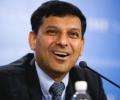
RBI conducts interviews for first lateral hire for CGM post; deputy governors to head four distinct verticals.
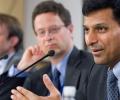
RBI projects GDP growth in FY16 at 7.8 per cent, 30 bps higher than FY15. However, this comes with a downward bias.
.jpg)
The RBI said lead indicators point to continuing sluggishness in domestic economic activity in the first quarter of 2014-15.

The economy is gaining traction with gradual pick up in manufacturing activity and moderation in contraction of services, spurred by comfortable liquidity conditions, an RBI article on Tuesday said. Observing that the retreat of the second wave of coronavirus pandemic has been slow, the RBI in an article on the 'State of Economy' said, the aggregate demand conditions are buoyed by the release of pent-up demand post unlock, while the supply situation is improving with the monsoon catching up to its normal levels and sowing activity gaining pace. "Reaffirming the traction that the economy is gaining, the manufacturing activity is gradually turning around, while contraction in services has moderated.

It can be noted that according to official estimates, GDP growth in FY14 is expected to come in at 4.9 per cent, up from 4.5 per cent in FY13, Icra said.
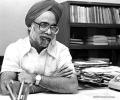
What stood out in his 15-year journey as a member of the political executive at the Centre was his glowing record as India's most successful and effective finance minister. Both as prime minister and finance minister, he understood the importance of gradualism, except when the economy or the polity was in a crisis.

Markets taking cue on future rate cuts from RBI policy.
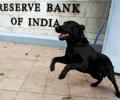
The Reserve Bank of India (RBI) has liberalised the procedure for facilitating the import of rough diamonds (termed roughs in the trade).

The Indian Met Department has predicted a below normal monsoon.
Has the Modi government been more at odds with institutions than other governments? There is no doubt that there have been more run-ins. While the RBI and CBI cases have drawn attention, there have been others, less publicised, Subhomoy Bhattacharjee points out.

Banks have raised concerns over the new international trade settlement in rupee, fearing that facilitation of such a mechanism could result in them facing the ire of economic sanctions by the West, people aware of the matter said. Large banks with overseas operations have sought clarity and assurance from the Reserve Bank of India (RBI) that they will not be targeted with sanctions for facilitating rupee trade with a sanction-hit country such as Russia. The present payment mechanism is a shift from earlier such arrangements, like the one with sanction-hit Iran, which involved banks facilitating settlement of international trade that did not have business in the sanctioned nation.

In his book, former governor Subbarao says Chidambaram, Pranab were piqued by his tight rate policy.
Central banking is a science, not an art, Tamal Bandyopadhyay tells RBI Governor Shaktikanta Das.

With a sole mandate of inflation targeting, RBI wears many hats.
The Financial Stability and Development Council meeting on Tuesday started with an air of tension in the room. An official present described the participants' body language as "tetchy". However, once presentations and discussions begun, the mood considerably eased.
RBI declines to accede to plea, upheld by Padmanabhan panel, for priority sector tag; feels move would dilute claims of those needing it more.

The former RBI deputy governor talked about the prospects of an economic revival, reforms in IMF, etc.
There is also a lobby within the bureaucracy that wants to see Rajan's influence curtailed

The RBI governor-designate may be economical with spoken words, but is known for his sharp and critical writings

A host of factors including the reform measures taken by the government and decline in global oil and commodity prices have led to lower inflation, the Finance Ministry said on Wednesday.
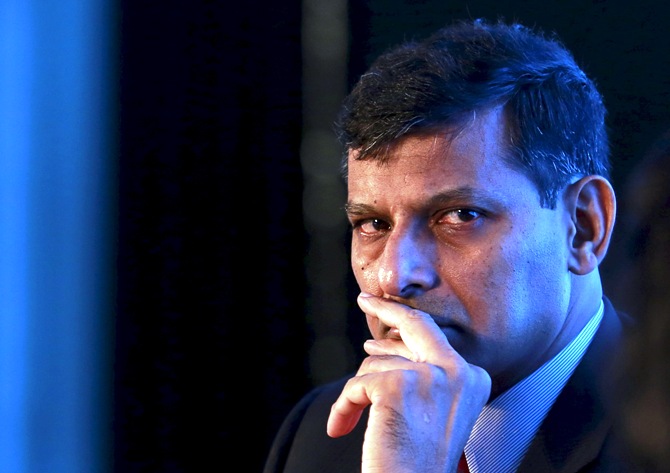
We need a change in mindset, says the RBI Governor.
If the new governor can think out of the box even as he signals that he can bat for the RBI cadre and respect its institutional memory, that will go a long way in getting out of the current impasse.

The finance ministry on Thursday raised concerns over the possible impact of El Nio conditions on India this year, saying if recent forecasts came true, the country could see lower agricultural output and higher inflation. "Some meteorological agencies predict the return of El Nio conditions in India this year. "If these predictions are accurate, then monsoon rains could be deficient, leading to lower agricultural output and higher prices," the ministry said in its monthly economic review.
FY22 will be the year to rebuild with the IMF projecting output growth at 11.5 per cent, economic survey at 11.0 per cent and the RBI's Monetary Policy Committee at 10.5 per cent.

Delivering the key mote address at the Citi's Investor Summit, Jaitley hoped that as a professional organisation the Reserve Bank will take 'the best decision'.
The RBI will have to focus on constructive change to ensure growth.

A fall presents an opportunity to buy rate-sensitive stocks.
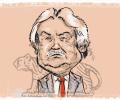
'I am sure Dr Patra will get the fullest cooperation from the finance minister who needs workhorses, not prima donnas constantly looking to improve their CVs,' says T C A Srinivasa-Raghavan.

Benchmark indices failed to sustain gains and retreated from day's high dragged primarily by the losses in metals, information technology and bank shares as investors started to book profits in late noon deals. Earlier, markets had scaled fresh all-time highs on the surprise post-budget rate cut by Reserve Bank of India (RBI). The 30-share Sensex ended down 213 points at 29,380 and the 50-share Nifty closed down 74 points at 8,922. Intra-day, Sensex reached the all-time high mark of 30,024.74 while Nifty touched the life-time high level of 9,119.20. In the broader market, both the BSE Midcap index and Smallcap indices, down 1% and 1.2% each underperformed the front-liners. Market breadth in BSE ended negative with 1,882 declines against 1,010 advances. A day after signing an agreement with Finance Ministry on inflation targeting, RBI surprised the markets with an early post-budget repo rate cut of 25 bps (basis points) to 7.5% from 7.75% which was again outside of central bank's scheduled policy review meetings as the earlier rate cut effected on January 15. "RBI's latest rate cut of 25 basis points, while a surprise in its timing is in-line with our expectations of a sharp rate-cutting cycle over the coming quarters. With inflation sustainably lower by 500bps, the RBI has in recent months acknowledged the scope for rate cuts and was only waiting for additional comfort that the government's fiscal policy would not play spoil-sport," said Dinesh Thakkar, chairman and managing director at Angel Broking in a note. Analysts at Karvy believe that further monetary policy action will depend on number of factors including easing of supply constraints, improved availability of power, land, minerals and infrastructure, fiscal consolidation, the pass through of rate cuts by banks and the expected monsoon. Citing weakness in some sectors of the economy and the overall global trend towards monetary easing as rationale for the rate cut the central bank also exuded confidence in the road map for fiscal consolidation as laid out in the Union Budget, 2015. Commenting on how the markets reacted to RBI's surprise move, K Subramanyam assistant vice-president (institutional research), Asit C. Mehta Securities said, "The unexpected cut did take the market by surprise .However, credit off-take is not dependant only on interest rates. A gradual revival in the economy would be of more help which would trigger credit off-take. Hopefully this will follow and RBI's action would prove helpful. From market point of view this is bullish as equity becomes more attractive vis-a-vis falling interest rates." On the macro-economic front, the HSBC services PMI rose to an eight-month high of 53.9 in February up from 52.4 in January indicating strong expansion in output across the sector. Respondents cited robust growth of new business as the principle factor for the increase in activity. Meanwhile, foreign portfolio investors (FPIs) bought shares worth a net Rs 773 crore on Tuesday, as per provisional data. Buzzing Stocks 9 out of the 12 sectoral indices of BSE ended in red. BSE Metal index, down 2.4% was the top loser followed by BSE Oil & Gas and Power indices, down 1.3% each. BSE Healthcare index, up 1.2% and BSE FMCG index, up 0.9% were the top losers. Bank stocks came under during late noon trades as traders booked profits at higher levels. However, RBI rate cut may encourage large lenders to cut their lending rates boosting demand for home and auto loans and provide funds for various stalled and new projects. Many stalled projects across the country are waiting for cash to restart work. The stock of stalled projects at the end of December 2014 stood at Rs 8.8 lakh crore or 7% of GDP. ICICI Bank ended down 0.1%, Axis Bank and SBI declined over 3% and HDFC Bank shed 1.5%. Sun Pharma gained over 6% on approval granted to Sun Pharma Advanced Research Company (SPARC) by US FDA for an antiepileptic drug. The product will be manufactured by Sun Pharmaceutical Industries at its Halol (Gujarat) facility in India. SPARC was formed in 2007 when Sun Pharma separated out its active projects in drug discovery and innovation into a new company. Dr Reddys Lab and Cipla have gained over 1% each. ITC gained over 1% after consecutive sessions of losses on the proposed larger-than-expected hike in excise duty on cigarettes in the Union Budget. The biggest ever auction of spectrum by the Department of Telecommunications (DoT) started on Wednesday in the morning where government expects to garner Rs 80,000-1lakh crore from the sale of spectrum. Idea Cellular gained over 2%, Reliance Communication gained around 1% and Bharti Airtel closed 0.5% higher. Metal stocks were under pressure in today's session. Hindalco declined over 3%, Sesa Sterliteended down over 4% and Tata Steel closed down 2%. Profit-taking in IT stocks led to Wipro losing around 1.8%, Infosys declining 0.7% and TCS losing 1.5%.

The finance ministry has ruled out the proposal for the appointment of a chief operating officer (COO) of the rank of deputy governor in the Reserve Bank of India (RBI), as the government feels no interim arrangements should be made for such high-profile appointments.

While Governor Das was sanguine on government walking the fiscal prudence path--which was missed three out of the five budgets of the Modi government--Acharya pointed to the fiscal slippages as a worry.

'The Reserve Bank's independence has remained a work in progress, an enduring challenge that the nation has been grappling with on an ongoing basis,' says RBI Deputy Governor Dr Viral Acharya.

The average bank customer does not know about the Customer Charter because it was designed - under Mr Rajan's regime - to be a lame duck initiative from the start: violating the charter has no consequences, points out, Debashis Basu.

The more competent junior or the outsider with experience in the field should get the higher post.

Maintaining a rapid pace of the vaccination drive and quickly bridging healthcare infrastructure gaps across both urban and rural areas would emerge as the most sustainable stimulus for durable recovery of the Indian economy, says a report by the department of economic affairs.

Since December 2018, monetary policy has been eased substantially by RBI with policy rates being cut by 75 bps and policy outlook being changed to 'accommodative'.

Economic affairs secretary S C Garg said that all macroeconomic parameters are performing well.
 © 2026 Rediff.com - Advertise with us - Disclaimer - Privacy Policy - Sitemap - Feedback - About us - Terms of use - Grievances